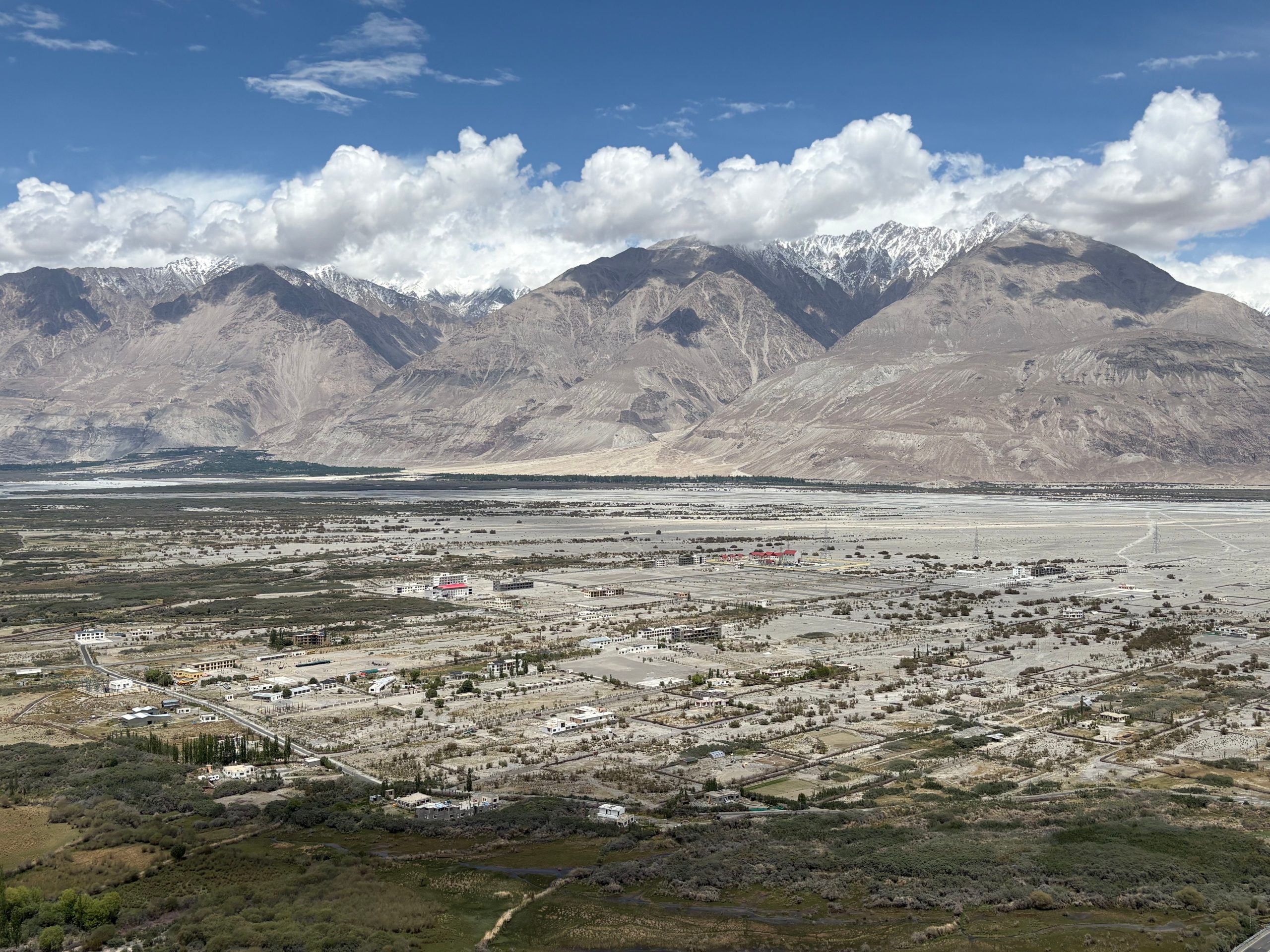
The administration of Ladakh has announced the establishment of 17 new tehsils as of Monday, July 13, 2026, aimed at strengthening grassroots governance in the region. Along with this, the Ladakh Autonomous Hill Development Council (LAHDC) Act will now be applicable to all seven districts of the Union Territory.
Ladakh Chief Secretary Ashish Kundra remarked,
“The administration is working on an institutional framework suitable to Ladakh’s unique requirements. We are taking steps to ensure the benefits of the LAHDC Act extend to all seven newly created districts through appropriate legal provisions.”
Previously, Ladakh was divided into only two districts, Leh and Kargil. In April of this year, five additional districts—Sham, Nubra, Changthang, Zanskar, and Drass—were officially established. With the inclusion of 17 new tehsils, the total number of tehsils in Ladakh has now risen to 32.
Mr. Kundra explained that these initiatives would facilitate access to government services for local residents, reduce travel for citizens in remote areas, and enhance infrastructure and development efforts across regions, including Zanskar, Drass, Nubra, Changthang, and Sham.
The administration has also issued posting orders for tehsildars in the new tehsils and has created four new divisions under the Public Health Engineering (PHE) and Flood Control Department, alongside five divisions under the Public Works Department (PWD) and PMGSY, aimed at improving service delivery in remote areas.
According to Mr. Kundra, significant strides have been made concerning government recruitment, decentralized governance, and ongoing dialogues regarding constitutional safeguards for Ladakh. He noted that several rounds of discussions have taken place with representatives from religious organizations and civil society.
“The minutes of the meetings held on May 22 and July 3 have been made publicly available to ensure transparency. There is a general consensus on the need to protect Ladakh’s land, culture, and identity while fostering inclusive development,” Kundra added.
In July, a draft proposal presented by a team from the Ministry of Home Affairs (MHA) in Leh indicated that the government was contemplating a tailored sui generis model under Article 371, particularly designed for Ladakh.
However, Kargil-based civil society group, the Kargil Democratic Alliance (KDA), has expressed concerns regarding this development, claiming that the allocation of tehsils shows a significant imbalance. KDA leader Sajjad Kargili pointed out that the former Leh district received 12 new tehsils, while the former Kargil district was given only five.
He stated, “This disparity is difficult to reconcile with objective parameters. Kargil has a larger population and a greater number of villages than the other five newly created districts combined, yet its administrative needs seem to have been overlooked. Even more strikingly, Drass has not been granted a single additional tehsil, despite its considerable population and genuine administrative requirements.”
Ladakh was designated as a Union Territory in 2019 after being separated from the Jammu and Kashmir state. The current developments may have a lasting impact on governance and administrative efficiency in the region.