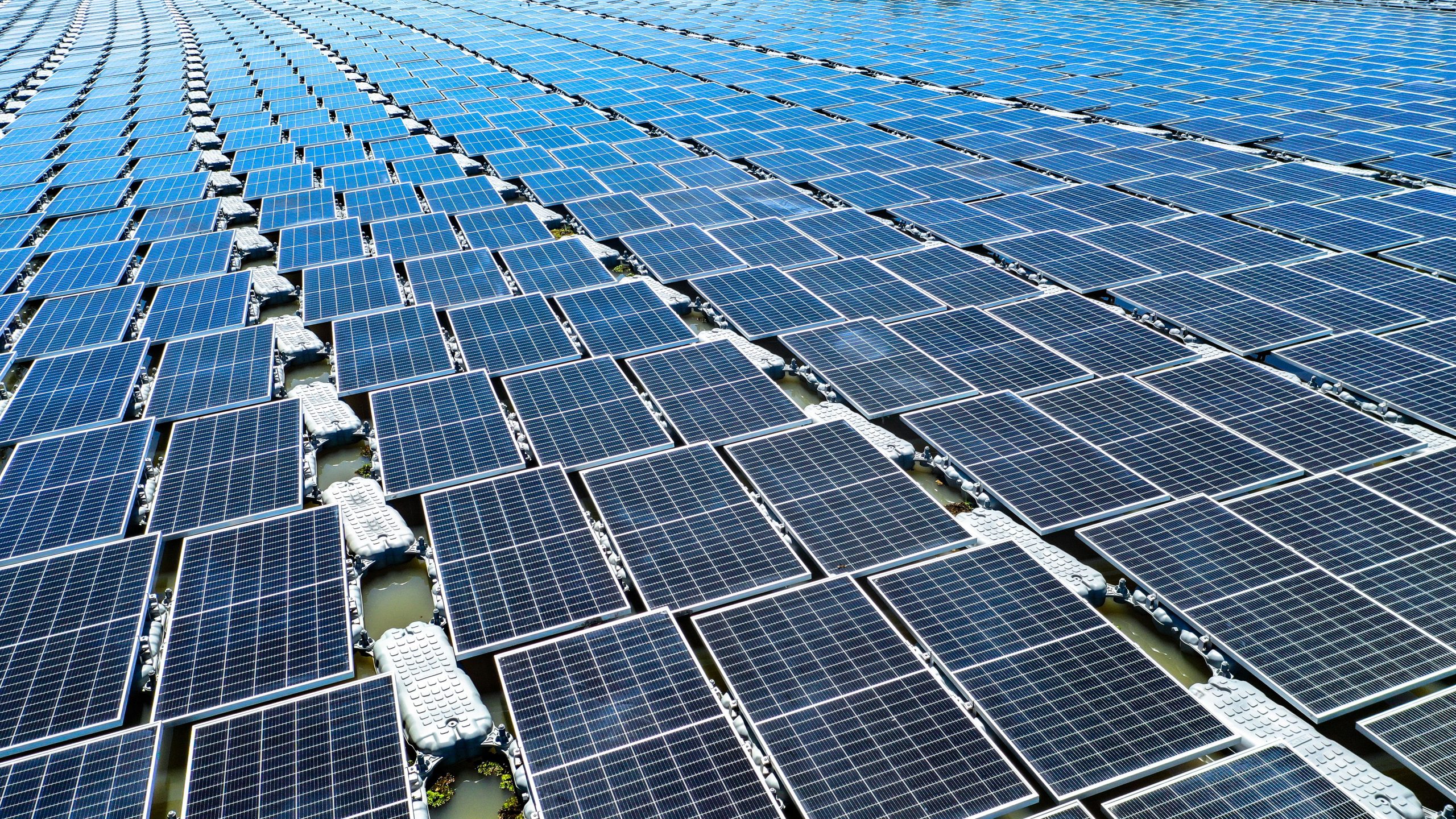
In a significant development, the Union Cabinet has approved the Pradhan Mantri Surya Sarovar Yojana (PM-SSY), a central initiative aimed at establishing 5,000 MW of floating solar photovoltaic (FSPV) capacity across India’s reservoirs and water bodies. The scheme has a total financial outlay of ₹5,070 crore, with provisions for Central Financial Assistance (CFA) of up to ₹1 crore per MW, which will be made available only upon successful commissioning of the plants.
Each project under this scheme must include an energy storage system with a minimum capacity of two hours, collectively designed to provide 10,000 MWh of stored energy. This capacity will enable States to utilize the stored power during peak demand periods. The Solar Energy Corporation of India (SECI) will oversee the implementation of this groundbreaking initiative, which is projected to attract investments amounting to approximately ₹28,500 crore. Currently, India has about 0.7 GW of installed floating solar capacity but has the potential to expand this to 102 GW.
Understanding Floating Solar Plants
A floating solar plant consists of solar panels that rest on a water surface, such as reservoirs, irrigation tanks, or industrial ponds, rather than terrestrial land. These modular panels are assembled onshore and then floated out to their designated positions, secured by anchors and mooring lines designed to withstand environmental factors like wind and fluctuating water levels. Inverters are typically placed on the floating structures or at the shoreline, with power cables running over the floats to connect to a substation.
The Need for Additional Solar Capacity
India’s solar power sector, with an existing capacity of nearly 100 GW, often faces output restrictions not due to a lack of sunlight, but due to a shortage of suitable land for ground-mounted systems. A potential assessment conducted by the National Institute of Solar Energy (NISE) in June 2026 identifies land availability as a significant constraint, particularly where agricultural, urban, and forested lands compete for space. Floating solar technology leverages existing water resources owned by States, distributing power generation even to those States lacking renewable energy resources but possessing significant reservoirs. By incorporating obligatory energy storage, these plants can provide electricity during evening peak hours instead of wasting midday output, addressing the ongoing issue of power curtailment—where solar power generation is intentionally limited to maintain grid stability.
Addressing Land Acquisition Challenges
The pressing issue of land availability comes as utility-scale solar requires large, contiguous parcels of land, a challenge that has become increasingly contested as prime locations are utilized. Land acquisition can lead to conflicts over compensation, displacement, and changes in land use, in addition to competing interests in agriculture. Floating solar technology mitigates most of these concerns since it only requires land for the cabling that connects the power to the grid.
Support for Feasibility Studies
The Centre is funding feasibility studies to enable States to overcome the risks associated with a technology they have limited experience with. The scheme allocates advance CFA of up to ₹30 lakh, increasing to ₹50 lakh per site. This funding will facilitate necessary surveys—including bathymetry, hydrography studies, ecological impact assessments, and solar yield evaluations—with the feasibility report required within nine months. By absorbing these initial costs and reducing technical burdens, the government hopes to encourage State Governments to actively pursue project proposals.
Operational Safety of Floating Solar Plants
Floating solar panels generate electricity from sunlight in the same manner as land-based systems, with the key difference being their flotation and mooring systems. Water cooling can optimize energy production, while the shaded surface reduces evaporation and algae growth. However, mechanical wear and tear poses challenges, as some developers report cable breakages and safety concerns during monsoon seasons that necessitate trained personnel and stringent protocols.
Global Experience and Trends
The transition of floating solar from a niche market to a mainstream option has occurred within a decade, with an estimated global capacity nearing 9.6 GW by 2024. Each year, roughly 1–1.2 GW of capacity is added across over 500 completed projects, with more than 90% of these projects located in Asia. China leads in adoption, followed by India, South Korea, and Japan, where land scarcity coupled with policy support and substantial reservoirs has driven growth. Europe is currently a smaller market but is expanding, increasing from 10 MW in 2017 to nearly 270 MW by 2022, with the Netherlands accounting for a significant portion of this capacity. Emerging markets include Israel, Brazil, Chile, Ghana, and Australia. According to the World Bank, leveraging only a fraction of the world’s man-made reservoirs could facilitate the generation of several terawatts of solar energy.
Operational Risks of Reservoirs
One challenge that floating solar plants face is the declining water levels in reservoirs, which poses an operational risk. Changes in water levels can alter mooring tensions and movement of the solar arrays over time. Hence, sites with fluctuating water levels will require adaptive mooring solutions to maintain stability.
Cost Implications
Implementing floating solar technology does come at a higher cost. The Renewable Energy Ministry estimates that the cost of ground-mounted solar systems ranges between ₹3.9–4.2 crore per MW, while FSPV costs between ₹4.9–5.2 crore per MW, reflecting a roughly 25% increase due to the necessity for additional infrastructure like floats, anchors, and mooring systems. The mandatory battery storage further adds ₹0.9–1.2 crore per MWh.
States with Highest Potential
Maharashtra (with a potential of 16.28 GWp) and Madhya Pradesh (with 14.89 GWp) lead in FSPV potential, followed by Karnataka, Odisha, Telangana, and Gujarat. Many of these States currently lack substantial renewable resources, making this scheme a strategy for decentralized solar energy deployment.
The Current Landscape
At present, India’s floating solar initiatives remain limited and lack battery storage systems. For example, the Omkareshwar park in Madhya Pradesh operates two plants, and another facility is under development in Jharkhand—none of which include the battery storage now mandated by the PM-SSY.
Climate Commitment Implications
The addition of 5,000 MW under this initiative significantly contributes to India’s non-fossil energy capacity, supporting the country’s climate commitments, including its updated Nationally Determined Contribution and the Panchamrit goals of achieving 500 GW of non-fossil power by 2030 and net-zero emissions by 2070. The government estimates that this scheme will result in the abatement of around 10 million tonnes of CO₂ emissions annually while creating approximately 16,000–17,000 jobs across the value chain.