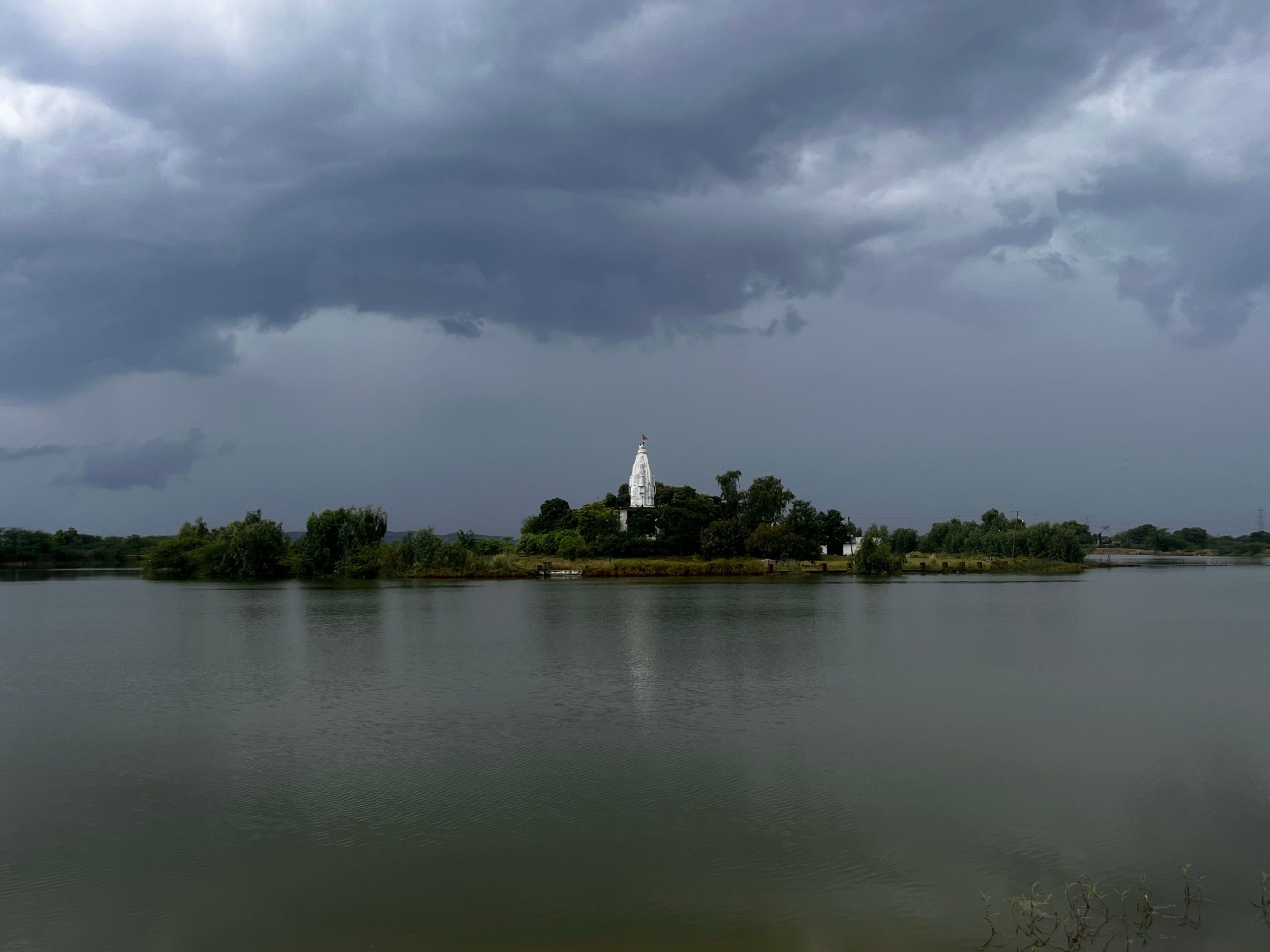
Grey monsoon clouds loom low over the Shiromani Shri Guru Ravidass Mandir, nearly brushing against its iconic white domes and arched gateways. This sprawling religious complex, occupying 11.5 acres, prominently features in the skyline along the Grand Trunk Road in Chak Hakim village, situated in the Kapurthala district of Punjab.
Affectionately referred to as the Guru Ghar by its devotees, this mandir is dedicated to the revered 15th-century saint-poet Guru Ravidass. While serving primarily as a site for worship, it has evolved into a significant emblem of the Dalit community’s strengthening economic, religious, and political presence, signaling a gradual move away from their historical marginalization.
Punjab, characterized by its agrarian economy, is predominantly home to Jat Sikhs, the leading landowning group, alongside a substantial population of Scheduled Castes (SCs). As per the 2011 Census, SCs constitute nearly 32% of Punjab’s population, marking the highest percentage among Indian states. Yet, wealth and land have historically been concentrated within the Jat Sikh community, leaving most SC members to serve as agricultural laborers.
Historically, social hierarchies were evident in both religious and residential structures, especially in rural settings. Large gurdwaras constructed by the dominant landowning Jat Sikhs were situated centrally, while smaller places of worship were established by Dalit communities, often located on the outskirts of villages.
Today, the emergence of complexes like that in Chak Hakim is reshaping these traditional narratives. Davinder Kultham, president of the Shiromani Shri Guru Ravidass Mandir Prabandhak Committee, attributes part of this transformation to the migration of community members seeking better opportunities. This trend has been particularly notable in Punjab’s Doaba region, with many SC individuals relocating to countries like Dubai, the U.K., the U.S., and Canada, thus improving their socio-economic standing.
Punjab is geographically categorized into three regions: Malwa, Doaba, and Majha. The Dalit population is unevenly spread, with the highest concentration found in Doaba, nestled between the Beas and Sutlej rivers. Guru Ravidass, born into a Chamar family traditionally associated with leather work and historically considered “untouchable,” received SC status following India’s Independence, part of an affirmative action strategy in public education and employment.
“Today, the third and fourth generations of our community are living abroad. Money sent home by non-resident Indians (NRIs) has brought about a marked change in how Dalit families see themselves and what they aspire to,” says Kultham.
He emphasizes that the Guru Ghar at Chak Hakim has been largely established with support from NRIs, with nearly 70% of the funding sourced from Dalit expatriates. While construction of this significant complex began in the 1960s, momentum picked up only after 2005. The land was generously donated decades ago by a Dalit NRI who owned a textile factory in England. Currently, they also operate a school for underprivileged children, charging nominal fees.
Additionally, the site features a charitable dispensary, a community kitchen, and lodging facilities for travelers. Kultham adds, “Years ago, this would have been unimaginable,” as he gestures toward an area where a sarovar (sacred pool) is under construction.
The Chak Hakim area holds profound spiritual significance for the Ravidassia community. Believers maintain that Guru Ravidass spent approximately 70 days here, conducting spiritual congregations. An older shrine, located across the road from the Guru Ghar, is believed to mark the precise location of his stay, with its foundation laid in 1845. It was during the 19th century that the ascetic Mahant Baba Hira Das, a revered saint, identified this site as significant to the Guru’s life.
Gian Sheel, a 45-year-old resident from Dhaddey village near Phagwara, recounts his family’s journey back to his grandfather, who was engaged in the leather sector when it was thriving in Doaba. As larger enterprises reshaped the industry landscape, his grandfather migrated to England in 1952.
“Today, the third and fourth generations of our community are living abroad. Money sent home by non-resident Indians (NRIs) has brought about a marked change in how Dalit families see themselves and what they aspire to,” remarks Kultham.
Despite the community’s strides in economic and political realms, Barna articulates that social barriers still endure. “The Sri Guru Granth Sahib is installed at the Guru Ghar. Yet, the majority of those who visit are from our community. It is still seen as an SC space,” he notes. With Punjab gearing up to celebrate Guru Ravidass’s 650th birth anniversary on February 20, 2027, the grand entrance gate at Chak Hakim stands as a powerful symbol of the Dalit community’s escalating religious, social, and political prominence, as well as their ongoing quest for equality within Punjab’s social tapestry.