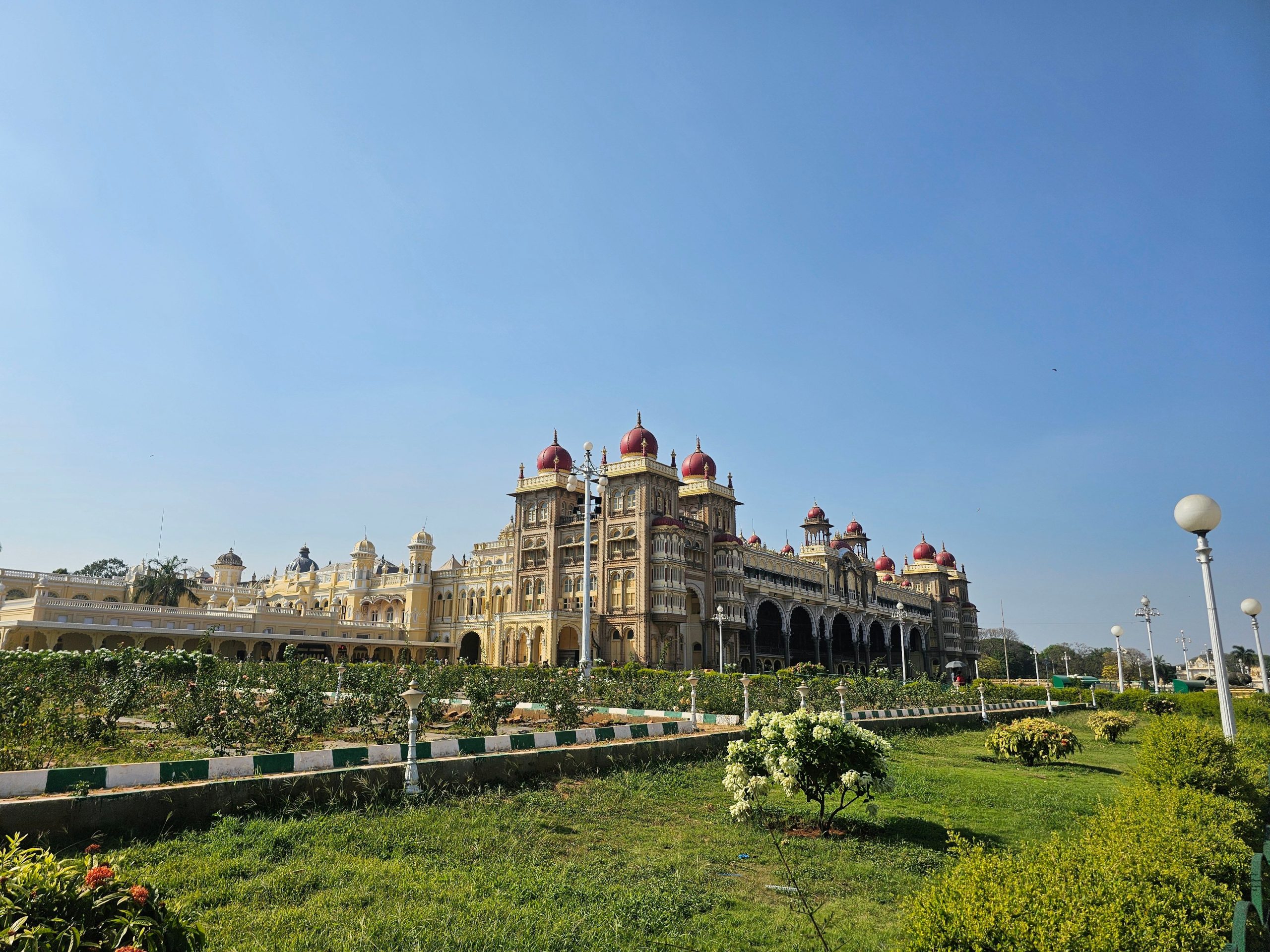
NEW DELHI: Prime Minister Narendra Modi inaugurated the Swami Vivekananda Cultural Youth Centre – Viveka Smaraka in Mysuru, Karnataka, on Saturday. He emphasized that this centre aims to inspire young Indians to adopt ideals centered around nation-building, service, and character development.
The Prime Minister was joined by Karnataka’s Chief Minister DK Shivakumar during the inauguration. Prior to unveiling the centre, PM Modi visited the Viveka Smaraka, offered prayers, planted a sapling, and viewed a short film detailing the life and legacy of Swami Vivekananda.
This youth centre has been constructed by the Sri Ramakrishna Ashrama, Mysuru, at a historically significant site where Swami Vivekananda stayed during his 1892 visit to Mysuru. It was during this visit that he decided to participate in the World’s Parliament of Religions held in Chicago in 1893.
Empowering the Youth
During his address, PM Modi stressed that the future of India hinges on empowering youth through education, opportunities, and the confidence to pursue their ambitions domestically. He stated, “In any country, the potential of the youth transforms into national strength only when they receive the right opportunities and direction, and the confidence to dream big and realise those dreams on their own soil. Our educational institutions play a pivotal role in this regard.”
Highlighting the government’s significant investments in higher education, the Prime Minister mentioned that India now boasts approximately 1.4 lakh MBBS seats, while the number of medical colleges has risen to 823. He also pointed out that the National Education Policy (NEP) is designed to equip Indian youth for the challenges of the 21st century.
India’s Cultural Heritage
PM Modi remarked that the youth of India, previously constrained, are now pivotal to global development. “Today, India’s economy is growing at the swiftest pace because of the strength of India’s youth, and we have the world’s third-largest startup ecosystem thanks to them,” he noted.
He acknowledged Mysuru’s unique significance in Swami Vivekananda’s life, calling it a hub of India’s cultural consciousness. “Today on this sacred land of Mysuru, I am experiencing a different kind of energy. I humbly bow at the feet of all saints. Mysuru has been a centre of India’s ancient cultural consciousness; India’s heritage is ingrained in every part of this city,” he added.
Historical Context and Future Aspirations
Recalling Vivekananda’s visit over 130 years ago, PM Modi mentioned how the Maharaja of Mysuru recognized the monk’s potential and extended support. “Mysuru played an important role in the life of Swami Vivekananda ji. About 130 years ago, when Swami ji, as a young monk, came to Mysuru while traveling, a prominent name associated with him was that of the then Maharaja of Mysuru. Swami Vivekananda ji wrote a letter from America mentioning the Maharaja’s support,” he said.
Modi added that the government aims to modernize educational infrastructure and adapt the education system to meet future requirements. He expressed confidence that the Viveka Smaraka will evolve into a hub for spiritual and cultural learning and become a pilgrimage site for seekers of spiritual upliftment.
“Through this Viveka Smaraka, we must mould young people who place the interests of society and the nation, as well as the suffering of the poor and the underprivileged, above their own personal joys and sorrows. Youth for whom ‘Nation First’ is the supreme guiding principle, and whose life mission is the service of Mother India,” PM Modi declared.
Access and Promotion of Education
The Prime Minister underscored that equitable access to education is vital for national development, stating that the government is advocating for education in Indian languages. “Swami Vivekananda considered equality to be just as crucial as education for the upliftment of the nation. Ensuring there is no discrimination in education or opportunities has now become the nation’s vision. Facilities are now available to pursue studies in fields like medicine and engineering in one’s mother tongue. This is helping to curb discrimination in opportunities based on language,” he explained.
Furthermore, he appealed for support of Indian culture by encouraging people to assist local artisans and purchase Indian-made products, specifically mentioning Mysuru’s silk and handicrafts as ideal gifts.