With less than a year remaining before the 2027 Punjab Assembly elections, the Congress party is confronting another bout of leadership discord. Supporters of former Chief Minister Charanjit Singh Channi are vocally advocating for his ascendance to the position of president of the Punjab Pradesh Congress Committee (PPCC), challenging the current incumbent, Amrinder Singh Raja Warring. This rift exposes the underlying factional tensions within the party’s state unit.
The latest wave of dissatisfaction was ignited by the All India Congress Committee’s organizational restructuring that took place on July 1. Although Mr. Warring retained his role as the PPCC chief, Mr. Channi was designated as chairman of the State election campaign committee. This arrangement was meant to balance competing factions but instead has incited fresh grievances among party members.
Mr. Channi, a prominent Dalit leader and Lok Sabha member from Jalandhar, was hoping to either take on the position of state president or be projected as the party’s chief ministerial candidate. Shortly after the reshuffle, he called a meeting of his loyal supporters at his residence in Morinda to assert his claims before higher party officials.
Despite the repeated interventions from Punjab affairs in-charge Bhupesh Baghel—who has dismissed the idea of an immediate leadership change while consulting with senior party leaders to unify the organization—the unrest continues. The Congress has attempted to accommodate all major factions without favoring one over another by distributing organizational responsibilities strategically.
Mr. Warring remains as the PPCC president, while Pratap Singh Bajwa continues as the Leader of the Congress Legislature Party. Mr. Channi will lead the campaign committee, Sukhjinder Singh Randhawa heads the Core Committee, Vijay Inder Singla oversees the election management committee, and Amar Singh leads the manifesto committee. Additionally, Sukhwinder Singh Danny, Raj Kumar Verka, and Sangat Singh Gilzian have been appointed as working presidents.
This distribution of roles reflects the Congress leadership’s effort to provide every influential member with a significant position while maintaining the existing organizational hierarchy. However, the absence of senior MP Manish Tewari from any election-related committees underscores the limitations of this balancing act.
The leadership challenge is rooted not just in internal party politics but also in Punjab’s complex social dynamics. Dalits, who make up nearly 32% of Punjab’s population—the highest among Indian states—are a crucial electoral demographic. Traditionally, political power has belonged to Jat Sikhs, who represent about 20-22% of the population and exert significant influence in rural politics.
The religious demographics of Punjab further complicate the political landscape. Sikhs comprise approximately 58% of the population, while Hindus account for about 38-39%, especially in urban areas.
Channi’s supporters assert that appointing the first Dalit Chief Minister as PPCC chief could help the Congress effectively consolidate Scheduled Caste voters and project a commitment to greater social inclusion. They cite his consistent advocacy for improved Dalit representation within the party, an issue he publicly championed last year.
Conversely, Mr. Warring, a Jat Sikh leader, commands a politically influential base that Congress cannot afford to alienate. Therefore, the leadership question is not merely about hierarchy but also about maintaining equilibrium between Punjab’s two most significant electoral blocs.
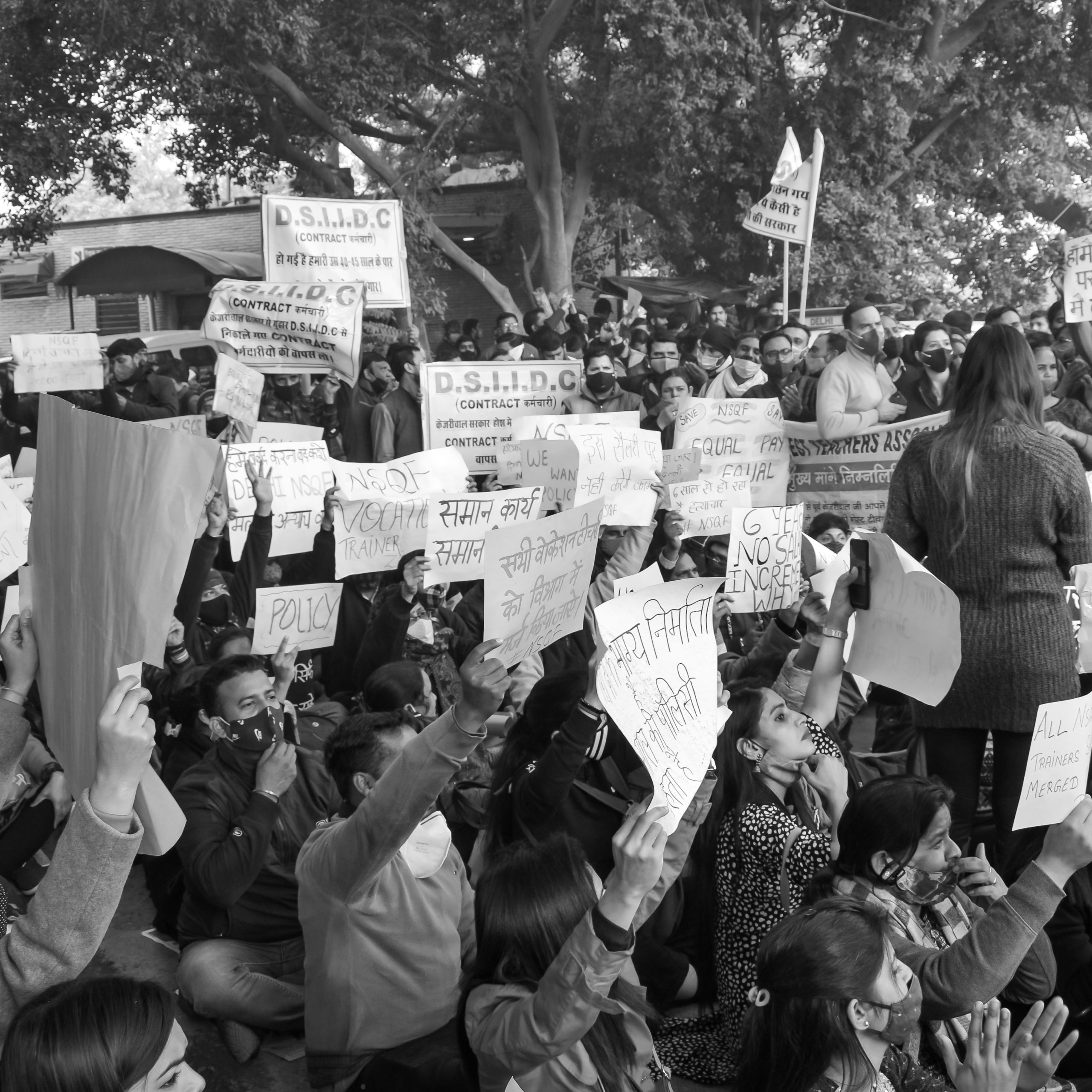
The internal discord has publicly manifested. On July 3, Mr. Channi convened a meeting at his residence in Morinda, followed by another in Mohali to demonstrate strength and encourage the high command to revisit its recent decisions. Attendees included former Deputy Chief Minister O.P. Soni and several former Ministers and MLAs, who collectively expressed that they had no issues with the high command but desired reconsideration of organizational changes.
In a more pointed political critique, Mr. Randhawa emphasized that Punjab requires “a leader who speaks with conviction” rather than a “compromised leader,” a remark given additional weight following his meeting with Union Home Minister Amit Shah, which he insisted was solely related to addressing Punjab’s deteriorating law and order situation.
In response to these controversies, Mr. Warring remarked that there should be no “sleeper cell” or “compromised leader” within the Congress ranks.
This ongoing crisis has revived memories of the party’s prior internal conflict before the 2022 Assembly elections, where prolonged public disputes between former Chief Minister Captain Amarinder Singh and PPCC chief Navjot Singh Sidhu paralyzed governance and undermined party unity. Subsequently, the Congress replaced Captain Amarinder Singh with Mr. Channi, thus making him Punjab’s inaugural Dalit Chief Minister in a bid to galvanize Scheduled Caste support ahead of the elections. Unfortunately, this strategy proved ineffective, culminating in a significant defeat to the Aam Aadmi Party, with Mr. Channi himself losing both constituencies in which he contested.
This new leadership tussle is drawing inevitable comparisons to that episode, raising concerns that the Congress may once again approach the elections fragmented.
Currently, the Congress high command has limited options. One avenue is to maintain the current arrangement and enforce cooperation between Mr. Warring and Mr. Channi while hoping that organizational discipline will quell factional desires. A second option is to replace Mr. Warring if internal pressures mount, but such a decision could risk alienating Jat Sikh leaders within the party. The third option involves upholding the present organizational structure while rigorously addressing public dissent and solidifying organizational discipline.
For a party eager to regain power after a dismal performance in 2022, the challenge extends beyond merely choosing between Mr. Warring and Mr. Channi. The Congress leadership must ensure that Punjab does not revisit the factional strife that hampered its campaign five years ago.